
01 / THE SERVICE
A higher bill is a clue, not a location
Start by comparing water use with changes in household activity, irrigation and known appliance use. Running toilets, dripping fixtures and irrigation issues can account for loss without an obvious indoor puddle. Meter activity when all intentional use has stopped can suggest a leak, but automatic appliances and irrigation must be considered. It does not establish where the water is escaping.
02 / THE SERVICE
Visible and concealed leaks
Look only at safely accessible areas for signs such as staining, damp cabinets or water around connections. A concealed supply leak may need a different investigation from a drain leak that appears only while a fixture is used. Tell the provider what triggers the symptom and whether it continues when the fixture is off.
03 / THE SERVICE
How location can be narrowed
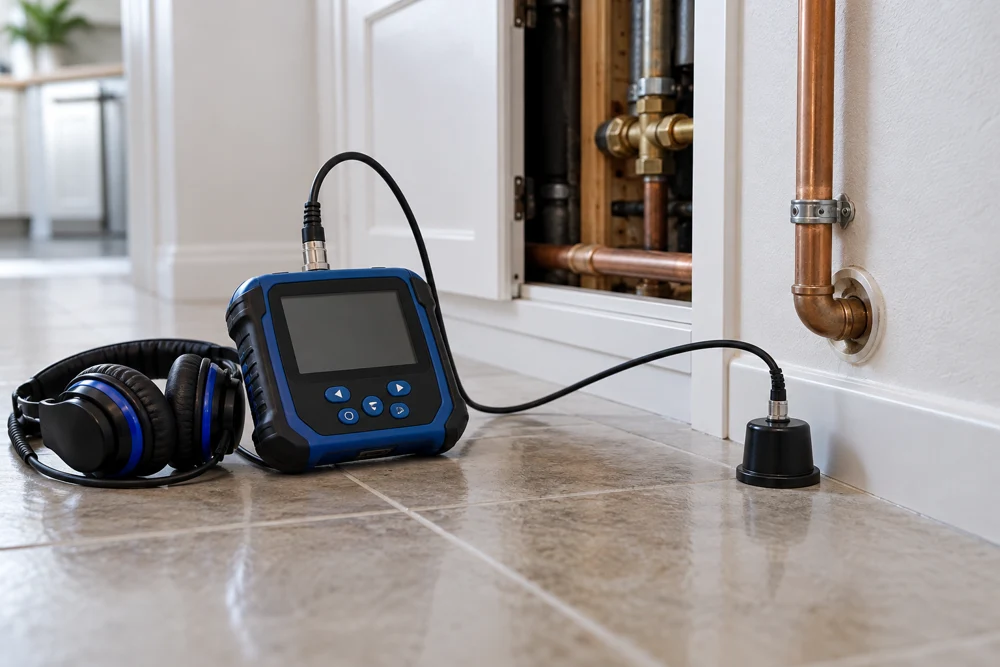
Depending on the system, a qualified provider may use isolation, pressure testing, acoustic equipment or other suitable tools. Moisture and temperature observations can support the investigation, but they are not automatic proof of a particular pipe failure. Ask what has been confirmed and what remains uncertain before approving invasive access.
04 / THE SERVICE
From detection to repair planning
Finding a suspect area is not the same as documenting a repair scope. Discuss pipe material, access, the possibility of additional damage and restoration responsibilities. A localized repair and a reroute solve different problems. The proposal should explain why the chosen approach fits the finding rather than simply offering the most extensive option.
05 / THE SERVICE
Prepare useful details
Note the timeline, recent water bills, affected rooms and any prior repair history. Photographs of a safely visible damp area can help an operating provider. Share details through your chosen provider's verified contact channels rather than this website.
Common questions
Service questions, answered.
Does a meter test prove a slab leak?
No. It can suggest water use or loss, but fixtures, appliances, irrigation and other routes need consideration.
Does leak detection always avoid opening a surface?
No. Tools can help narrow a location, but access may still be needed to confirm or repair a problem.