
01 / THE SERVICE
Recognize a wider drainage problem
Several slow fixtures, repeated backups or wastewater returning at a low fixture can indicate a shared drain issue. A single symptom does not reveal whether the cause is roots, buildup, a damaged section or another condition. Note which fixtures are affected and whether the pattern changes during heavy use.
02 / THE SERVICE
What camera footage can—and cannot—show
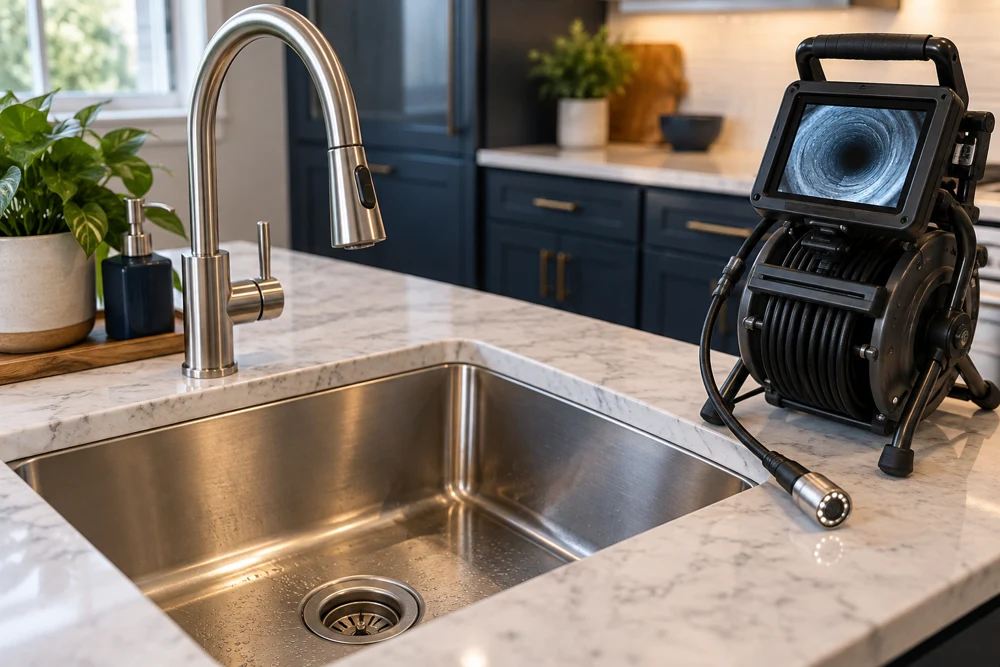
A sewer camera may reveal accessible internal pipe conditions once the line can be inspected. Ask the provider to identify the relevant footage and explain the location. Standing water, a blocked lens or incomplete access can limit interpretation. Camera findings should be connected to the proposed scope rather than presented as a generic reason to replace everything.
03 / THE SERVICE
Cleaning versus structural repair
Removing grease or another obstruction is different from correcting a failed joint or damaged pipe. If the same problem returns, ask whether the underlying cause has been established. Repeated cleaning can be reasonable in some situations, but it should not conceal uncertainty about a structural issue.
04 / THE SERVICE
Trenchless options are not universal
Lining, replacement and excavation each depend on access and the existing line. A pipe’s alignment, remaining condition and connections can affect feasibility. Ask which options were considered, why a particular method is suitable and what preparation, inspection and restoration are included.
05 / THE SERVICE
Make the estimate comparable
Ask for the investigated length and location, proposed method, access plan and exclusions. Discuss permits, final inspection and who restores paving or landscaping. Before approving an extensive project, a second written assessment may help you understand alternatives.
06 / THE SERVICE
What a useful inspection report includes
Ask for the inspected route, access point, observed defect and any limits to the inspection. The repair proposal should distinguish confirmed findings from sections that could not be assessed. Cleaning, spot repair and broader replacement have different scopes; none should be selected from a single unexplained image.
Common questions
Service questions, answered.
Can roots mean a pipe needs immediate full replacement?
Not automatically. Entry points, pipe condition and recurring symptoms need assessment. Ask for supporting findings and feasible alternatives.
Is trenchless repair always possible?
No. Existing conditions and access determine suitability.